
Libya Travel Guide: Discover the Mediterranean’s Last Untouched Treasure
For travelers seeking raw authenticity, ancient wonders, and landscapes untouched by mass tourism, Libya offers one of the most extraordinary journeys on Earth. Often misunderstood, this North African gem rewards curious explorers with breathtaking Roman cities, golden Sahara dunes, and vibrant cultural traditions that span thousands of years.
Bordered by the shimmering Mediterranean Sea and dominated by the endless Sahara Desert, Libya presents a rare opportunity to witness history, nature, and living heritage in their purest form. If you dream of discovering places before the crowds arrive, Libya stands among the world’s most fascinating frontiers.
Why Libya Is the Ultimate Destination for Adventurous Travelers
Unlike typical Mediterranean destinations, Libya offers something increasingly rare: untouched authenticity. With vast open landscapes and remarkably preserved historical sites, the country feels like an open-air museum waiting to be explored.
What makes Libya special:
-
Ancient ruins without crowds or commercial distractions
-
One of the longest Mediterranean coastlines in Africa
-
Desert landscapes covering nearly the entire country
-
Rich cultural influences from Phoenicians, Greeks, and the Roman Empire
-
Warm hospitality rooted in deep cultural traditions
Unlike heavily visited destinations, Libya offers genuine discovery—where history feels alive and personal.
Read also: A Guide To A Weekend In Windhoek
Libya’s Ancient Cities: Walking Through Thousands of Years of History
Libya is home to some of the most spectacular archaeological sites in the world, many recognized as UNESCO World Heritage Sites.
Leptis Magna: The World’s Best-Preserved Roman City
The magnificent ruins of Leptis Magna stand as Libya’s greatest treasure. Once a thriving Roman metropolis, this coastal city features:
-
Massive amphitheaters overlooking the sea
-
Grand temples and ceremonial arches
-
Intricate mosaics and ancient marketplaces
-
Roman bath complexes with remarkable detail
Walking through Leptis Magna feels like stepping into the Roman Empire at its peak.
Amazing Fact: Leptis Magna was once larger and more advanced than many Roman cities in Europe.
Sabratha: Coastal Beauty Meets Ancient Civilization
Located along the Mediterranean, Sabratha offers stunning ruins combined with sea views.
Highlights include:
-
A spectacular Roman theater still standing today
-
Ancient temples and columns
-
Seaside ruins glowing golden at sunset
The peaceful setting makes it one of the most photogenic historical sites in North Africa.
Cyrene: The Lost Greek City in the Mountains
Hidden in Libya’s eastern highlands, Cyrene reveals Libya’s Greek heritage.
Visitors can explore:
-
Ancient temples dedicated to Greek gods
-
Massive necropolises carved into hillsides
-
Panoramic views over the Mediterranean
This forgotten city showcases Libya’s diverse and layered history.
Libya’s Capital Tripoli: Culture, Markets, and Coastal Charm
The capital, Tripoli, offers a fascinating blend of history and modern life.
Inside the Old Town, you’ll discover:
-
Narrow alleys filled with traditional markets
-
Ottoman-era mosques reflecting the legacy of the Ottoman Empire
-
Artisan workshops producing handmade crafts
-
Bustling cafés serving mint tea and local dishes
Martyrs’ Square and the seaside promenade offer perfect spots to experience everyday Libyan life.
Amazing Fact: Tripoli’s Old Town has been continuously inhabited for thousands of years.
Libya’s Sahara Desert: Endless Adventure and Natural Wonder
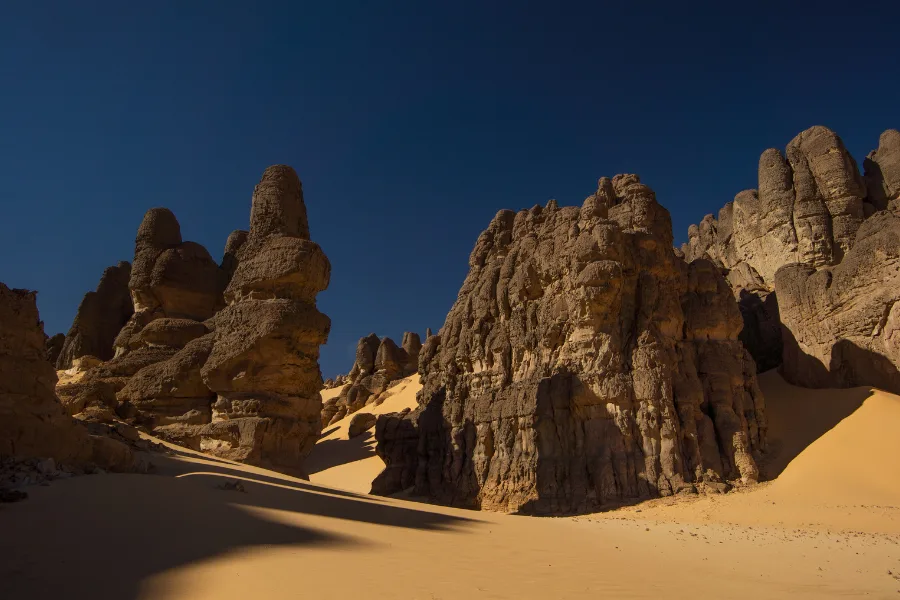
Beyond the coast lies Libya’s most dramatic landscape—the Sahara Desert.
Here, travelers can experience:
-
Towering golden sand dunes
-
Remote desert oases
-
Camel trekking across vast horizons
-
Night skies filled with brilliant stars
The desert provides unmatched peace, silence, and natural beauty.
Ghadames: Libya’s Magical Desert Oasis
The UNESCO-listed town of Ghadames is one of the Sahara’s most remarkable settlements.
This ancient oasis features:
-
White mud-brick homes designed for desert survival
-
Covered alleyways providing natural cooling
-
Traditional Amazigh architecture
-
Unique desert culture preserved for centuries
Often called the “Pearl of the Desert,” Ghadames feels like stepping into another world.
Food in Libya: Authentic Flavors and Warm Hospitality
Libyan cuisine reflects Mediterranean and desert influences.
Must-try dishes include:
-
Couscous with lamb and vegetables
-
Fresh seafood along the coast
-
Dates grown in desert oases
-
Traditional bread baked daily
-
Sweet mint tea served as a symbol of hospitality
Meals in Libya are more than food—they are cultural experiences.
Libya Travel Tips: What You Need to Know
Travel to Libya requires planning, but the rewards are extraordinary.
Important tips:
-
Guided tours are required for visitors
-
Tour operators handle permits and transportation
-
Respect local customs and dress modestly
-
Stay with experienced guides for safety and access
-
Visit historical sites with local experts for deeper understanding
Tourism is gradually growing, and responsible travel helps preserve Libya’s heritage.
Why Libya Is One of the World’s Most Underrated Destinations
Libya offers something rare in modern travel: authenticity without crowds.
From Roman cities frozen in time to silent desert landscapes, the country invites travelers to explore without distractions.
Reasons Libya stands out globally:
-
Some of the best-preserved ruins on Earth
-
Vast untouched natural landscapes
-
Authentic cultural experiences
-
Minimal tourist crowds
-
Deep historical significance
Libya isn’t just a destination—it’s a journey into humanity’s shared past.
Amazing Facts About Libya
-
Nearly the entire country is covered by desert
-
Libya contains five UNESCO World Heritage Sites
-
Leptis Magna rivals Pompeii in preservation
-
The Sahara Desert in Libya is among the world’s quietest places
-
Libya has one of Africa’s longest Mediterranean coastlines